
When to Replace Gutters: 7 Warning Signs Washington Homeowners Shouldn't Ignore

Gutters play an important role in protecting your home from water damage, especially in Western Washington, where frequent rainfall puts drainage systems to the test. When gutters stop functioning properly, rainwater can overflow onto siding, collect around foundations, and contribute to costly exterior damage.
Knowing when to replace gutters can help homeowners address drainage problems before they become more serious. While some issues can be resolved through cleaning or repairs, others indicate that the entire system may be reaching the end of its useful life.
At True Blue Roofing & Siding, we help homeowners throughout Maple Valley, Seattle, and surrounding Puget Sound communities protect their properties with professional gutter installation, replacement, and repair services.
Here are seven warning signs that it may be time to replace your gutters.
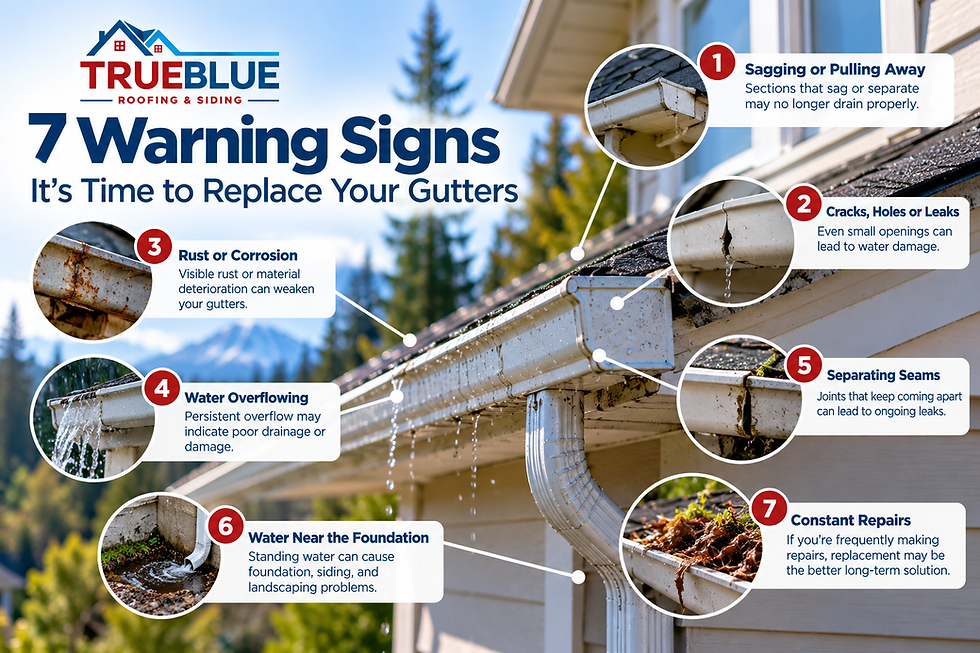
1. Your Gutters Are Sagging or Pulling Away From the House
Gutters should remain securely attached to your home's fascia and maintain a consistent slope toward the downspouts. When sections begin sagging, separating, or pulling away, the system may no longer drain water effectively.
Sagging can result from accumulated debris, standing water, damaged fasteners, or deteriorating fascia boards.
A loose bracket may be relatively simple to repair. However, widespread sagging, distorted gutter sections, or recurring attachment problems could indicate that replacement is necessary.
Addressing these issues early can also help protect the roofline. True Blue's residential roof repair and maintenance services can address related roofing concerns when drainage problems affect surrounding components.
2. You Notice Cracks, Holes, or Persistent Leaks
Small cracks and holes may seem insignificant, but even minor openings can allow rainwater to escape before reaching the downspouts. Over time, leaking gutters can contribute to:
Water stains on exterior walls
Deteriorating fascia and trim
Soil erosion around landscaping
Moisture accumulation near foundations
Damage to siding and exterior finishes
Isolated leaks may be repairable with appropriate sealing or replacement sections. However, recurring leaks across multiple locations often indicate that the gutter system is deteriorating.
If repairs are becoming frequent, investing in new gutters may provide better long-term value than continuing to address individual problems.
3. Rust, Corrosion, or Material Deterioration Is Visible
Different gutter materials deteriorate in different ways. Galvanized steel gutters may develop rust as their protective coating wears away. Aluminum gutters resist rust but can experience corrosion or damage under certain conditions. Vinyl gutters may become brittle, crack, or lose their shape over time.
Watch for peeling finishes, corrosion around seams, thinning metal, and sections that appear structurally weakened. Surface discoloration alone does not necessarily mean replacement is required. However, extensive corrosion or deteriorating material can compromise the gutter's ability to contain and direct rainwater.
Homeowners considering replacement can explore several materials through True Blue's gutter services, including aluminum, galvanized steel, vinyl, and copper.
4. Water Regularly Overflows During Rainstorms
Overflowing gutters are particularly concerning in Western Washington, where prolonged rainfall can expose drainage problems. When water spills over the gutter edges, it may indicate clogged downspouts, insufficient gutter capacity, improper slope, or damaged sections.
Before assuming replacement is necessary, determine whether leaves, moss, or debris are restricting water flow. Professional cleaning may restore normal drainage. However, gutters that continue overflowing after cleaning may be improperly sized, poorly positioned, or structurally compromised.
Persistent overflow can also affect nearby roofing materials. Our article on how to protect your home from water damage explains how roofing, gutters, siding, and windows work together to prevent moisture-related problems.
A properly designed gutter system should collect roof runoff and direct it safely away from vulnerable areas of the property.
5. Gutter Seams Keep Separating
Traditional sectional gutters contain multiple joints where individual pieces connect. These joints can become weak points as sealants deteriorate, fasteners loosen, or materials expand and contract.
Occasional seam repairs are normal, particularly on older systems. However, repeatedly separating joints can create persistent leakage problems. If several seams require frequent attention, replacing the existing system with seamless gutters may be worth considering.
Seamless gutters are manufactured in continuous lengths to fit individual roof sections, reducing the number of joints where leaks can develop.mAlthough corners and downspout connections still require proper sealing, seamless systems can reduce maintenance associated with traditional sectional gutters.
For homeowners planning a larger exterior improvement project, gutter replacement may also be coordinated with residential roofing services to ensure the roof edge and drainage system work together effectively.
6. Water Is Collecting Near Your Foundation
One of the clearest signs of a drainage problem is water accumulating around your home's foundation after rainfall. Gutters and downspouts should move water away from the building rather than allowing it to collect directly beside exterior walls. Warning signs include:
Standing water near the foundation
Eroded soil beneath gutter sections
Splash marks on siding
Persistent dampness around basement walls
Landscaping damage beneath roof edges
These problems do not automatically mean your gutters need replacement. Poor downspout placement, blocked drainage lines, or improper grading may also contribute.
However, damaged or undersized gutters can worsen these conditions by allowing excessive runoff to fall near the house.
Prolonged moisture exposure may also damage exterior siding. If water has affected your home's walls, True Blue offers professional siding repair and replacement services throughout the Seattle metro area.
7. Your Gutters Require Constant Repairs
Every gutter system needs occasional maintenance, but repeated repairs can become a sign that replacement is the more practical option. If you're regularly paying to reseal joints, reattach sagging sections, repair leaks, or replace damaged components, those costs can accumulate.
Older systems may also struggle to meet your home's current drainage needs, especially if roof modifications or additions have changed how water flows.
Rather than evaluating each problem individually, consider the overall condition of the system.
A professional inspection can help determine whether targeted repairs will provide reliable performance or whether replacing the gutters offers better long-term protection.
Gutter Repair vs. Replacement: Which Makes More Sense?
Not every gutter problem requires a complete replacement.
When Gutter Repair May Be Appropriate
Damage is limited to one or two sections
The gutters remain structurally sound
Minor leaks can be effectively sealed
Loose fasteners can be securely replaced
Drainage problems result primarily from debris buildup
When Gutter Replacement May Be The Better Option
Multiple sections are sagging or deteriorating
Corrosion or cracks affect large portions of the system
Seams repeatedly separate
Repairs are becoming increasingly frequent
The existing system cannot adequately manage roof runoff
The best decision depends on the gutter material, age, installation quality, and extent of the damage.
How Long Do Gutters Last in Washington?
Gutter lifespan varies significantly depending on the material, installation quality, maintenance, and environmental conditions. Aluminum and galvanized steel gutters commonly last around 20 years, although actual service life can be shorter or longer. Copper gutters can last substantially longer with proper installation and maintenance.
Western Washington's frequent rainfall, tree coverage, and seasonal debris can increase maintenance requirements. Regular cleaning, inspections, and prompt repairs can help extend gutter life. Homeowners should pay particular attention to drainage performance during the rainy season and after significant storms.
Age alone should not determine whether replacement is necessary. A well-maintained older system may continue functioning properly, while a newer system with installation defects may require attention much sooner.
Choosing the Right Replacement Gutters for Your Home
When replacement becomes necessary, selecting the right gutter material and design is important.
Aluminum gutters are popular because they are lightweight, rust-resistant, and available in multiple colors. Galvanized steel offers strength and durability but requires attention to corrosion. Copper provides a distinctive appearance and long service life, while vinyl can offer a lower initial cost but may be less durable in certain conditions.
Gutter sizing, slope, downspout placement, and roof drainage patterns are equally important considerations. Professional installation helps ensure the new system handles rainfall effectively and directs water away from the home's foundation.
Protect Your Washington Home With True Blue Roofing & Siding
Knowing when to replace gutters can help you prevent avoidable water damage and maintain your home's exterior.
Whether your gutters are sagging, leaking, overflowing, or showing signs of age, a professional evaluation can help determine the most practical solution.
True Blue Roofing & Siding provides gutter cleaning, repairs, installation, and replacement throughout Maple Valley, Seattle, and surrounding Western Washington communities.
Our team can evaluate your existing system, explain available gutter materials, and recommend solutions suited to your home's drainage needs.
Don't wait for failing gutters to cause costly exterior damage. Contact True Blue Roofing & Siding to request an estimate and learn more about professional gutter replacement services in Western Washington.



Comments