
Commercial Roof Maintenance: How to Extend the Life of Your Commercial Roof

A commercial roof is a major investment, but getting the most value from that investment requires more than waiting for something to go wrong.
Leaks, damaged seams, clogged drainage systems, deteriorating flashing, and other roofing problems often begin small. When they go unnoticed, those minor issues can develop into expensive repairs, water damage, or even premature roof replacement.
That is why commercial roof maintenance should be part of a long-term property management strategy.
For businesses in Western Washington, regular maintenance is especially important. Frequent rain, moisture, wind, debris, and changing seasonal conditions continually put commercial roofing systems to the test. A proactive approach can help identify developing problems, extend roof life, and make roofing expenses easier to plan.
True Blue Roofing & Siding provides commercial roofing services throughout the Seattle metro area and Western Washington, including inspections, repairs, replacements, maintenance, and flat roofing solutions.
What Is Commercial Roof Maintenance?
Commercial roof maintenance is the ongoing process of evaluating and caring for a roofing system to keep it performing properly.
It is different from simply calling a roofing contractor when water starts entering the building. Preventive maintenance focuses on identifying vulnerabilities before they become larger problems.
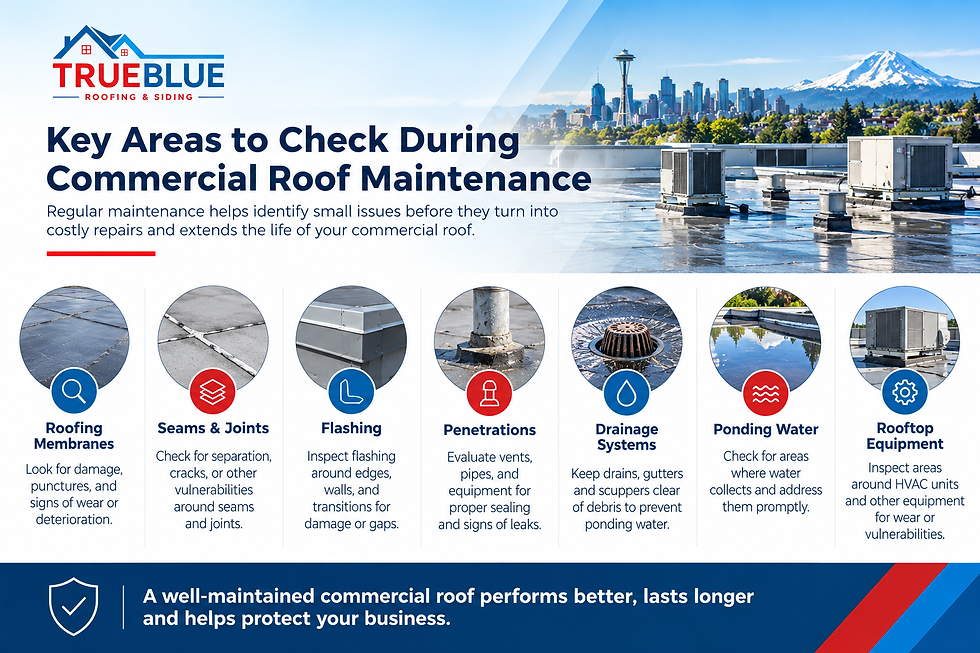
Depending on the roof, maintenance may include checking:
Roofing membranes for damage or deterioration
Seams and joints
Flashing around roof edges and transitions
Roof penetrations, vents, and equipment
Drains, gutters, and other drainage components
Areas where water tends to collect
Previous repairs
Signs of moisture intrusion
Loose, damaged, or deteriorating roofing materials
Overall roof condition
A professional commercial roof inspection can provide the starting point for determining what maintenance a particular roofing system needs.
If you are unsure what an inspection involves or how to budget for one, True Blue's guide to commercial roof inspection costs in Washington explains the factors building owners should consider.
Why Preventive Commercial Roof Maintenance Matters
Commercial roofing problems do not always announce themselves with an obvious leak.
A vulnerable seam, damaged flashing, small membrane puncture, or drainage problem may exist for some time before there are noticeable signs inside the building. By then, moisture may have already affected insulation, decking, or other components of the roofing system.
Preventive maintenance creates opportunities to address smaller concerns earlier.
For property owners and facility managers, that can mean fewer unexpected roofing
emergencies and a better understanding of the roof's overall condition.
It also provides useful information for budgeting. If inspections and maintenance indicate that a roofing system is beginning to approach the end of its service life, the business can begin planning for replacement instead of being forced into an unexpected capital expense.
Pay Particular Attention to Drainage in Western Washington
Water management is one of the most important considerations for a commercial roof.
Flat and low-slope roofs are designed to move water toward drains, scuppers, or other drainage systems. Leaves, branches, dirt, and other debris can interfere with that process.
When water cannot drain properly, it may collect in low areas of the roof.
Standing or ponding water deserves attention because it can place additional stress on the roofing system and expose vulnerable areas to moisture for extended periods.
Routine maintenance should therefore include evaluating drainage components and identifying areas where water repeatedly accumulates.
This is particularly important for commercial properties surrounded by trees or buildings that collect significant debris throughout the year.
Different Flat Roof Systems Have Different Maintenance Needs
There is no single maintenance plan that applies to every commercial building.
True Blue works with several flat roof systems, including TPO, EPDM, and roof coatings. Each has different characteristics and potential problem areas.
For example, maintenance of a membrane roofing system may involve paying close attention to seams, punctures, flashing, penetrations, and areas around rooftop equipment.
A coated roof may need to be evaluated for areas where the coating has deteriorated or where the underlying roofing system requires attention.
Understanding what is installed on your building matters. True Blue's guide to commercial flat roof systems provides a closer look at common systems and how their characteristics differ.
Maintenance Can Help Extend Commercial Roof Life
Every roofing system eventually reaches the end of its useful life. Maintenance cannot make a roof last forever, but it can help prevent avoidable deterioration from shortening that lifespan.
Consider a small damaged area of membrane.
If it is identified during routine maintenance, a contractor may be able to address the localized issue. If it remains unnoticed while water continues entering the roofing assembly, the eventual scope of work could become considerably larger.
The same principle applies to flashing, seams, drainage problems, and roof penetrations.
Addressing a roofing problem early is generally preferable to allowing it to spread.
When damage does occur, professional commercial roof repair can help restore the integrity of the roofing system and reduce the risk of further deterioration.
Maintenance, Repair, Restoration, or Replacement?
One advantage of consistently monitoring a commercial roof is having better information when larger roofing decisions need to be made.
Not every roofing problem means the building needs a new roof.
A roof that remains in generally good condition but has localized damage may be a candidate for repair. An aging roof may sometimes benefit from restoration or a protective roof coating. A roofing system with widespread deterioration or significant underlying problems may be better suited for replacement.
True Blue discusses these considerations in its guide to commercial roof repair vs. replacement.
There may also be situations where restoration provides another option. The article Commercial Roof Replacement vs. Roof Restoration explains how building owners can evaluate those two approaches.
Regular maintenance does not eliminate these decisions. Instead, it gives property owners more information and potentially more time to make them.
How Often Should a Commercial Roof Be Checked?
There is not a universal schedule that fits every commercial property.
The appropriate frequency depends on factors such as roof age, roofing material, building design, surrounding environment, previous damage, warranty requirements, and weather exposure.
It is also smart to have a roof evaluated after significant weather events or whenever building occupants notice signs of a possible problem.
Warning signs can include:
Interior water stains
Active leaks
Ponding water
Damaged or loose roofing material
Problems around rooftop equipment
Visible flashing damage
Unusual deterioration
Recurring repairs in the same area
If those problems appear, waiting for the next scheduled maintenance visit may allow the damage to worsen.
Build Commercial Roof Maintenance Into Your Property Plan
The best time to think about your commercial roof is not when water is entering the building.
Treating the roof as a long-term building asset allows owners and facility managers to plan inspections, maintenance, repairs, and eventual replacement more strategically.
Keep records of inspections and repairs. Understand what roofing system is installed. Pay attention to recurring trouble spots. After severe weather, consider whether an additional evaluation is appropriate.
Most importantly, work with a contractor experienced with commercial roofing systems.
If you are evaluating roofing companies, True Blue's guide on how to choose a good commercial roofing contractor outlines questions to ask before hiring one.
Protect Your Commercial Roof with True Blue Roofing & Siding
Commercial roof maintenance is ultimately about protecting the investment you have already made in your building.
By identifying developing problems earlier, maintaining drainage, addressing damaged materials, and monitoring the overall condition of the roofing system, property owners can reduce the risk of preventable damage and make better-informed decisions about future roofing work.
True Blue Roofing & Siding provides commercial roofing solutions throughout the Seattle metro area and Western Washington. From inspections and repairs to flat roofing systems and complete replacements, our experienced team can help you determine what your roof needs now and what to plan for next.
Don't wait for a small roofing issue to become a major business expense. Contact True Blue Roofing & Siding today to schedule an inspection and discuss a commercial roof maintenance plan for your property.


Comments